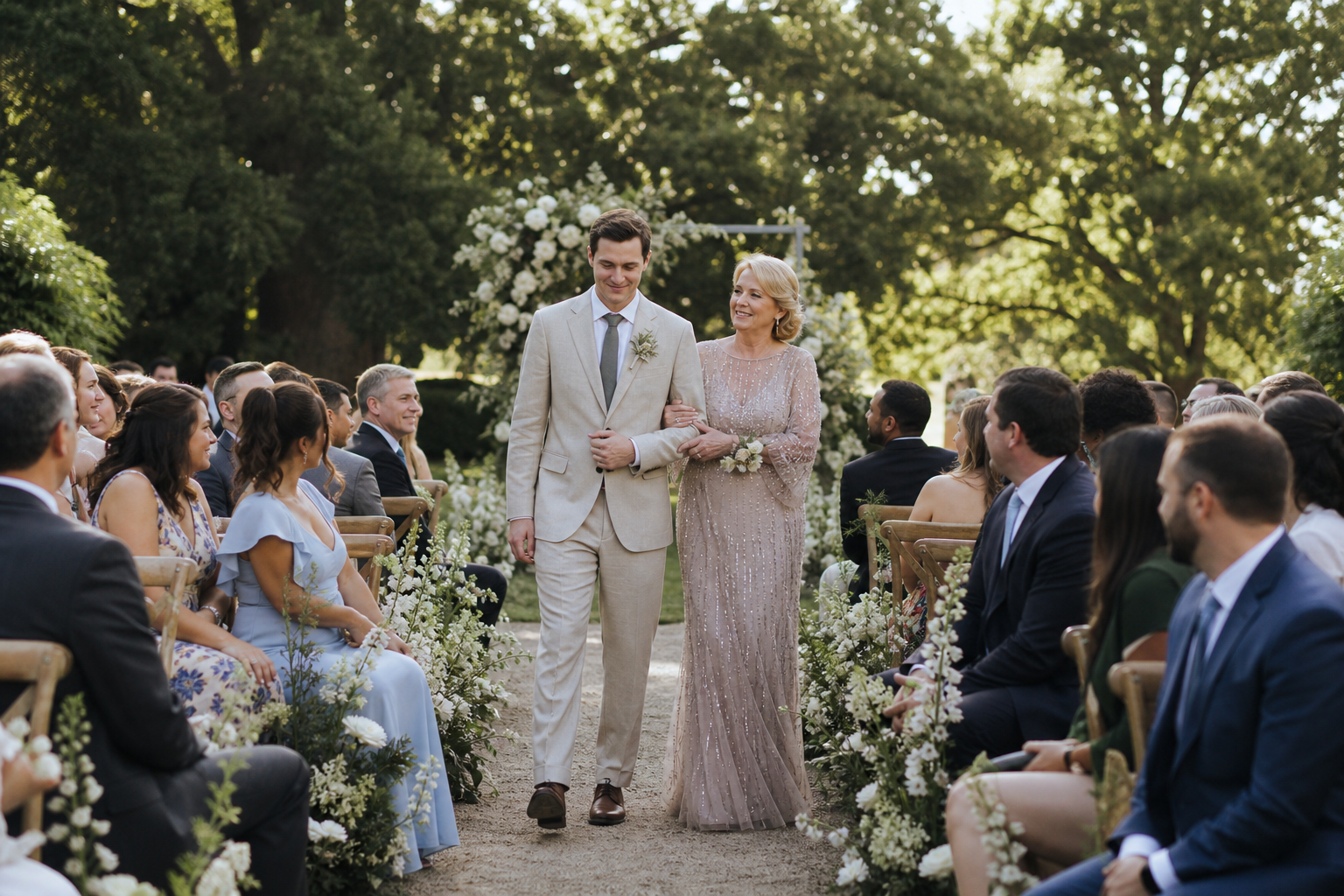
The simplest way to ask guests not to take photos during your wedding ceremony is to make one warm, specific request before the processional: invite them to put away phones and cameras, explain that you want them fully present, and tell them exactly when they can take and share photos instead. A brief officiant announcement, a visible sign, and a clear alternative for the reception usually make the request feel considerate rather than restrictive.
An unplugged ceremony does not mean you have to give up candid guest photos from your wedding. It simply gives your ceremony a protected, device-free window. Guests can still document cocktail hour, the dance floor, and all the little moments that happen once you are officially married.
Decide what “unplugged” means for your ceremony
Before choosing signs or wording, decide on the boundary you actually want. “Unplugged” can mean different things to different couples. A vague request is harder for guests to follow than a simple, defined policy.
| Approach | What guests may do | Best for |
|---|---|---|
| Fully unplugged ceremony | No phones, cameras, or tablets from processional through recessional | Couples who want a focused, visually clean ceremony |
| Phone-free processional only | Guests put devices away as the wedding party and couple enter, then may take a few photos later | Couples who especially want clear aisle photos |
| Professional photos only | Guests refrain from photography throughout the ceremony | Small, formal, or closely choreographed ceremonies |
| Photos after “I do” | Guests wait until the recessional or a designated moment | Couples who want both presence and a celebratory photo moment |
For most weddings, a fully unplugged ceremony followed by an enthusiastic invitation to take photos at the reception is easy to communicate. It avoids a long list of exceptions and gives guests a clear moment to participate later.
Use wording that is warm, not scolding
The tone matters as much as the rule. Guests are usually taking photos because they are excited for you, not because they want to disrupt the ceremony. Thank them for being there, make the request personal, and avoid language that sounds punitive.
Officiant announcement for an unplugged ceremony
Before we begin, the couple asks that you please silence and put away all phones and cameras for the ceremony. They would love for you to be fully present as they exchange vows. Their photographer will capture the moment, and there will be plenty of time to take photos and celebrate with them afterward. Thank you.
This version works because it answers the questions guests may have without overexplaining: What should I do? Put my device away. Why? The couple wants everyone present. Will there be photos? Yes. When can I take my own? Afterward.
Short unplugged wedding sign wording
- Welcome to our unplugged ceremony. Please silence and tuck away phones and cameras so we can share this moment together.
- Please be present with us. We have invited our photographer to capture the ceremony; we cannot wait to celebrate and take photos with you afterward.
- Phones away, hearts open. Kindly enjoy our ceremony without devices. Save your photos for cocktail hour and the reception.
Keep a sign short enough to read while walking into the venue. A sign is a helpful reminder, but it should support—not replace—an announcement made aloud.
Put the request in the right places
Guests are more likely to cooperate when they encounter the request more than once, in a few low-pressure places. You do not need to mention it on every piece of stationery. Choose the moments that reach people just before the ceremony.
- Your wedding website: Include a brief note under ceremony details for guests who like to plan ahead.
- At the ceremony entrance: Place a framed sign where guests naturally pause before taking their seats.
- In the program, if you have one: Add a one-sentence reminder near the order of events.
- In the officiant’s welcome: This is the most important reminder because every seated guest hears it.
If you are concerned about relatives who may not see a sign or hear an announcement, ask a trusted family member to mention the plan gently before the ceremony. This is particularly useful for a small ceremony where every guest may expect to take a close-up photo.
Give guests a clear opportunity to take photos later
A phone-free ceremony is easier to embrace when guests know their photos are welcome somewhere else. Tell them when: “Please take all the photos you want during cocktail hour and the reception.” That sentence turns a restriction into a plan.
You can also create a simple way for people to share those photos with you. A wedding photo QR code can direct guests to a private gallery where they upload the candid photos and videos they take after the ceremony. With Snap the Knot, guests can scan a QR code or open a link and upload without downloading an app or creating an account.
Consider displaying the upload instructions where photography is encouraged: at the bar, guest book table, dinner tables, or near the dance floor. That placement reinforces the distinction: devices away for the vows; joyful candid photos welcome for the celebration.
If you would rather make guest contributions part of the atmosphere, a Live Image Wall can provide a shared visual focal point during the reception. Be intentional about timing and placement so it does not compete with speeches, first dances, or other moments when you want guests’ attention in the room.
Prevent the most common unplugged ceremony problems
Make the request before anyone stands for the processional
Once the processional begins, people instinctively reach for phones. Ask your officiant to make the announcement before the wedding party enters. If your venue has a coordinator, confirm that the announcement is on the ceremony timeline.
Ask your photographer to help protect the aisle
Tell your photographer that you are hosting an unplugged ceremony and explain your exact policy. They can plan their angles accordingly, and they will appreciate knowing that you do not want guests leaning into the aisle with devices. Couples working with photographers can also explore a dedicated wedding photo sharing plan for photographers when collecting guest perspectives is part of the broader photo experience.
Do not create confusing exceptions
If you allow phones only during a specific song, after the kiss, or from the back row, say so precisely. Otherwise, guests may assume the rule does not apply to them. If the exception is not important to you, skip it. A single rule is kinder and easier to enforce than a detailed list.
Prepare for one or two imperfect moments
Even with excellent communication, someone may forget and lift a phone. Try not to let it take over your attention. Your officiant, planner, coordinator, and photographer can handle a major disruption if needed. Most of the time, a calm reminder at the start is enough.
How to handle family expectations kindly
Sometimes the hardest part is not the sign—it is a loved one who has strong expectations about taking photos. Discuss the plan before the wedding if you know someone may be disappointed. Let them know it is not personal and explain that you want everyone, including them, to experience the ceremony directly.
You can offer an alternative that feels inclusive. For example, invite them to take a family photo during cocktail hour, make time for portraits after the ceremony, or remind them that the professional gallery will document the vows. If they enjoy taking candid photos, specifically enlist them for the reception instead.
For divorced parents, grandparents, or friends traveling from far away, a small accommodation may be meaningful—but make it deliberately. You might ask them to remain seated and take one photo during the recessional rather than opening the door to devices throughout the ceremony.
Sample wedding website note
We are so grateful you will be joining us. To help us savor the ceremony with the people we love, we kindly ask everyone to keep phones and cameras tucked away until cocktail hour. Afterward, please take and share all the candid photos you would like—we cannot wait to see the celebration through your eyes.
This wording is clear without suggesting guests are doing something wrong. It also sets up the photo-sharing invitation before the wedding day, so the reception request will not be a surprise.
Make the day feel like yours
An unplugged ceremony is not a statement against guest photography. It is a choice to protect a brief, meaningful part of the day from screens, raised arms, and divided attention. By making one kind request and offering guests a clear way to participate after the vows, you can have the ceremony experience you want and still collect the candid memories you might otherwise miss.
When you are ready to plan the reception photo-sharing piece, you can start a free gallery and see how a private Snap the Knot gallery fits into your wedding plans.